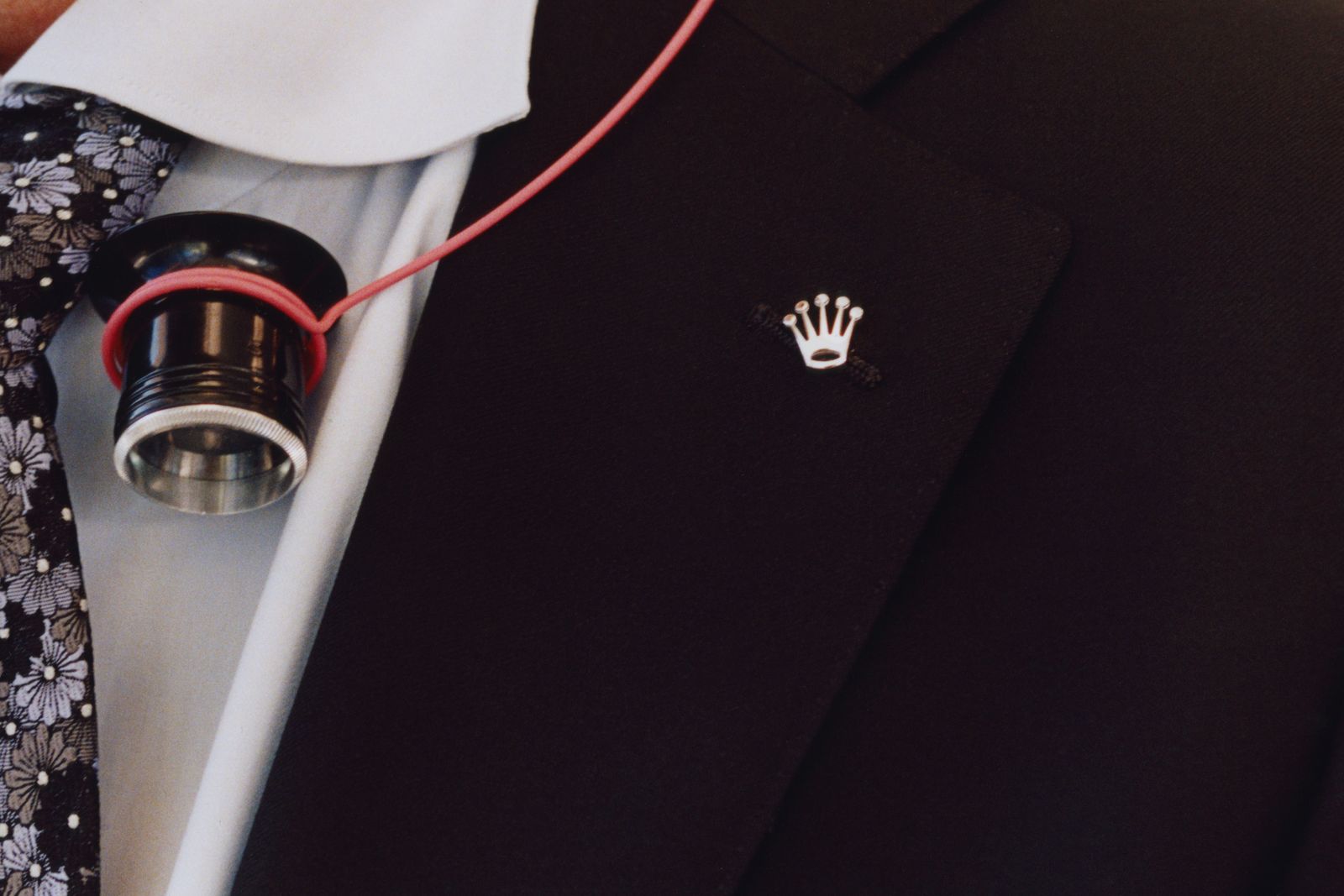
Open up a Rolex and you will peer into a hieroglyphic amalgam of gears, coils, and springs, underneath which is a Y-shaped bit of metal so Lilliputian that magnification is required to bring it into focus. This is the pallet fork. Eight times every second, the pallet fork seizes and releases the teeth of a disk called the escape wheel. Together, these two components make up the watch’s escapement. Every time the fork interacts with the gear, you get a tick. As the escapement repeatedly oscillates, it sends energy to the balance wheel, the swinging timekeeping component that regulates the accuracy of every Rolex watch. If the micrometers-thick pallet fork fails to catch the escape wheel, you might as well take that Rolex off and use it as a $30,000 paperweight—which is decidedly what you’re not supposed to do. You bought a Rolex, for Chrissake. The thing had better be on your wrist.
Explaining the fork’s significance is Jesse Rodriguez, one of the first 50 students enrolled at Rolex’s two-year-old Watchmaking Training Center. It’s a windy morning in Dallas in late October when he and I huddle at a workbench in a room lit brightly by sunshine pouring through floor-to-ceiling windows. Rodriguez is in his second year of the program and has begun to service real customers’ Rolexes under the supervision of instructors. Draped around him is a smart white coat, giving him the look of a neighborhood pharmacist. Over his right eye rests a magnifying loupe. (Think of a monocle half the height of a shot glass and you have the idea.) In his right hand a pair of tweezers points directly at one such minuscule, metallic Y, lying on a block of aluminum. He has just removed it from the movement, watch parlance for the internal mechanism, of a women’s thin-band, silver Rolex sent in for repairs.
This pallet fork is busted, Rodriguez informs me. Its edges are corroded due to years of wear and irregular servicing. As a result, the stored power meant to travel to the balance wheel instead transfers uncontrolled through the gear train, effectively unwinding the watch. If that were your Rolex, you’d look down at your wrist only to see the hands spinning freely—out of sync and out of time. Servicing the watch to replace the pallet fork costs more than $800, and takes at least a month, assuming the watch shop gets the repair right on the first go.

Hence this training center. Over the past decade a seismic shift has created a growing demand for watch repair—and, in turn, for competent repair people. A historic stock market run (and a new-moneyed class of crypto capitalists) minted a contemporary order of very rich people, and when the pandemic briefly turned off many of the ways those people spend money, a lot of them got into watches. It’s estimated Rolex now sells over a million watches a year for the first time in its history (while pulling off the remarkable trick in the luxury business of making its product seem rare). Meanwhile, the secondary watch market is flourishing thanks to improving e-commerce platforms and a growing hobbyist culture. Yet there are fewer than 2,000 watchmakers in America capable of mending a timepiece, let alone a luxury one.
Established in 2023, the school is an 18-month deep dive into the realm of Rolex: its design, components, and, most crucially, how to fix them. Rodriguez and 22 others are in the first cohort, whose coursework began in September 2024; a second cohort of 27 started in September 2025. And there are more to come. Some students are swapping decades-long careers. Others are college dropouts. Some are fresh out of high school. Still others are jaded white-collar workers. And some, like Rodriguez, are the bluest of blue collar: He’s a 48-year-old high school graduate who formerly repaired Bosch power tools for a living. Virtually all the trainees are drawn to work that is practical and technical but revere the emotional gravity of luxury watches.
“If you want to know what time it is, you don’t need a watch, but a Rolex means more than just that,” says Rodriguez. “It’s a marker of a moment in someone’s life.”
In 2024, the company received more than 560 applications for 27 spots, putting its acceptance rate on par with Harvard’s. A final exam at Rolex’s headquarters in Geneva, under the gaze of scrupulous Swiss proctors, awaits all students. Pass and they get to call themselves a Rolex Certified Watchmaker, with the potential to earn an average of $96,000 a year.
They also get to join the order of skilled workers pushing back against the disposability of modern consumer culture. Trying to get anything serviced these days can bring on feelings of loss and frustration—or, worse, resignation. Just buy new shoes, or a new toaster, or a new car. At times it can feel like we’re all riding an absurd carousel, desperately holding on to our most valuable possessions as they break down and become impossible to repair or replace at the same quality. But a Rolex is not something you merely replace. It’s an heirloom or an asset, symbolizing an achievement realized or, quite literally, the passage of time. A watch can even be, in its own way, a means to organize the chaos of life. When other things are so shitty that they can’t be restored, a Rolex owner can return to that reassuring ticking on their wrist and be reminded of something that is both fixed and fixable—so long as watchmakers are still around.
Hans Wilsdorf couldn’t have predicted the success of Rolex when he established the company in 1905. But the company’s obsession with precision, which allowed the then upstart to compete with Tissot, Longines, and Omega—and now necessitates a constant supply of watchmakers to service Rolex owners—has been there since the beginning. Indeed, the company’s earliest timepieces received certificates noting the chronometric quality of Rolex watches from such institutions as the Official Watch Rating Centre in Bienne, Switzerland, and the National Physical Laboratory in England. It’s estimated the brand now regularly receives almost half of all certificates issued annually by the Swiss Official Chronometer Testing Institute, founded in 1973 to establish guidelines on what makes a superlative wristwatch. The institute’s current standard for certification is a watch that deviates no more than minus-four-to-plus-six seconds per day. Rolex demands its watches deviate no more than minus-two-to-plus-two seconds per day.
During the years after the First World War, Rolex set itself on a trajectory that would make it the king of all wristwatches by filing a series of patents. In 1926, Rolex patented the first waterproof wristwatch. In 1931, it created the modern automatic movement, which winds the watch while it’s on the wearer’s wrist. Rolex also made improvements to screw-down crowns (the knob on the side of a watch), screw-down casebacks (the underside of a watch), and screw-down bezels (the outer ring surrounding the crystal of the watch face). In all, Rolex filed 82 patents from 1920 to 1945, and seven alone on the automatic movement. Over time, these developments formed the foundation of the watches for which Rolex is known today, like the Explorer, GMT-Master, and Submariner. Unlike their pocket watch predecessors, these watches were fit for outdoor activities, or at least suggested you might be the kind of guy who enjoys outdoor activities. “It’s a watch that serves a function,” says Jeffrey P. Hess, owner of Hess Fine Art. “It needed to survive water, dust, altitude, cold, heat. It needed to take abuse.”
They were small machines, tool watches, impervious to the elements and meant for people who did dangerous things, which Rolex demonstrated in its marketing. On her famed 1927 English Channel swim, Mercedes Gleitze wore a Rolex on a ribbon tied around her neck. When Everest was scaled for the first time, in 1953, the expedition members were outfitted with Rolex watches. They soared on the first commercial transcontinental flights of the 1950s and dove into the Mariana Trench in 1960. Before James Bond put an Omega on his wrist, he sported a Rolex Submariner.
With the help of the J. Walter Thompson advertising agency, Rolex broke into the American market, expanding its scope of achievements to include Cabinet meetings and mere business dinners. “Wherever historical decisions are made,” a 1956 ad boasted, the watches on wrists “will most likely have been made by Rolex of Geneva.” Men (and women) aren’t special because they wear a Rolex, the story went. Rather, they wear a Rolex because they are already important. “Rolex is not a watch. Rolex is a narrative about exceptionalism,” says Pierre-Yves Donzé, author of The Making of a Status Symbol: A Business History of Rolex. “You need to earn the right to have a Rolex by doing something.”
The lore of Rolex partly explains why its Geneva executives are famously tight-lipped with the media. Why did Rolex decide to open a school in 2023? What effect does the dearth of watchmakers have on enthusiasm for luxury watches? I was warned by a Rolex representative not to expect answers to these strategic questions. Rolex brass are not, as a rule, quoted in the press. According to Donzé, the Rolex theory of publicity is simple: There’s nothing to say. Just look at the watch.
Still, Rolex let me visit the school. I knew I was in the right place when I saw the crown: the unmistakable logo, fastened auspiciously to a wall of black flamed granite, just next to two large glass doors. It had seemed appropriate to pack my navy suit, which comes out of my closet only a few times a year. This is probably why it wasn’t until I put it on that I realized I had rendered the inside pocket of the jacket unusable: I’d left a stick of gum in there when I took it to the dry cleaners.
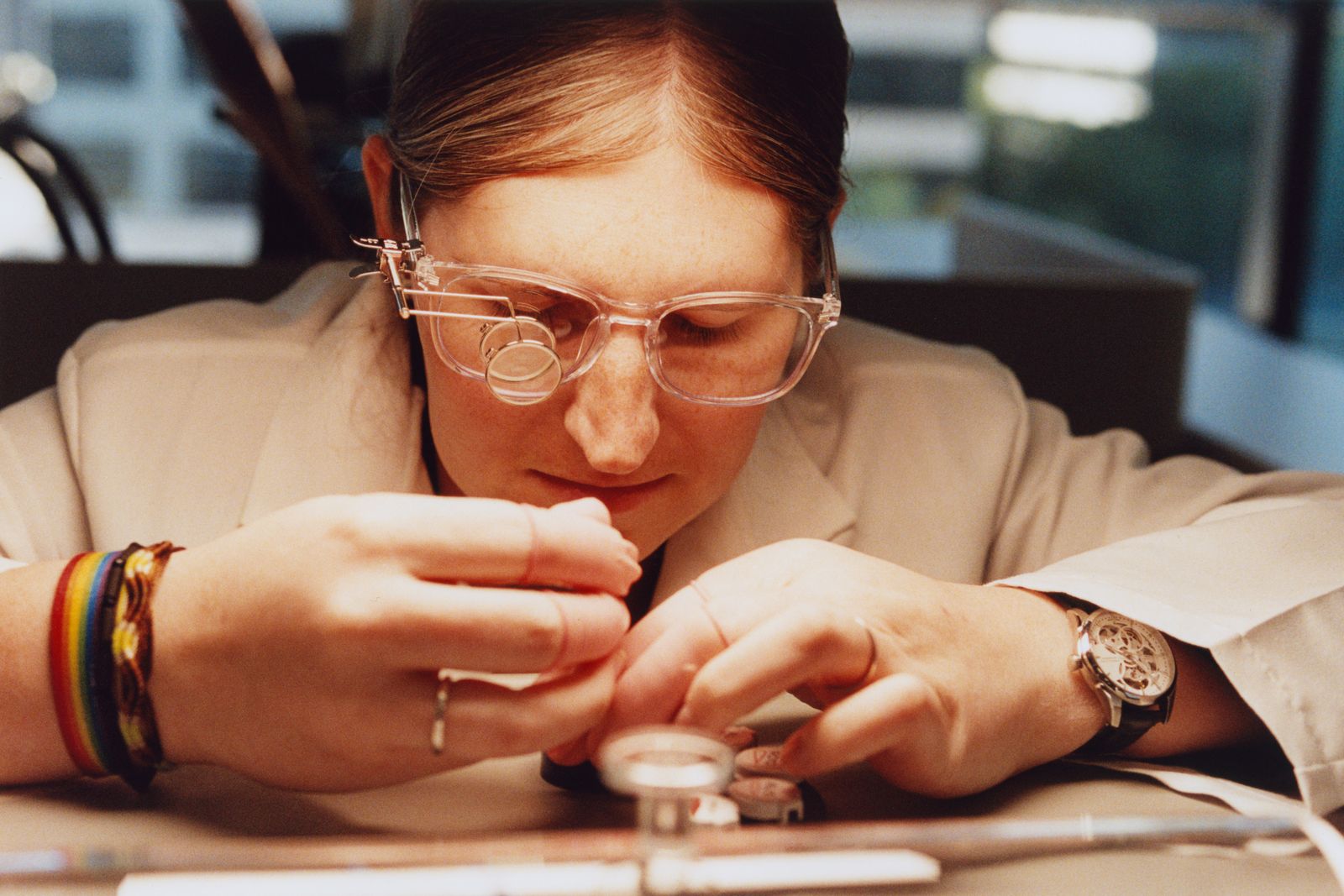
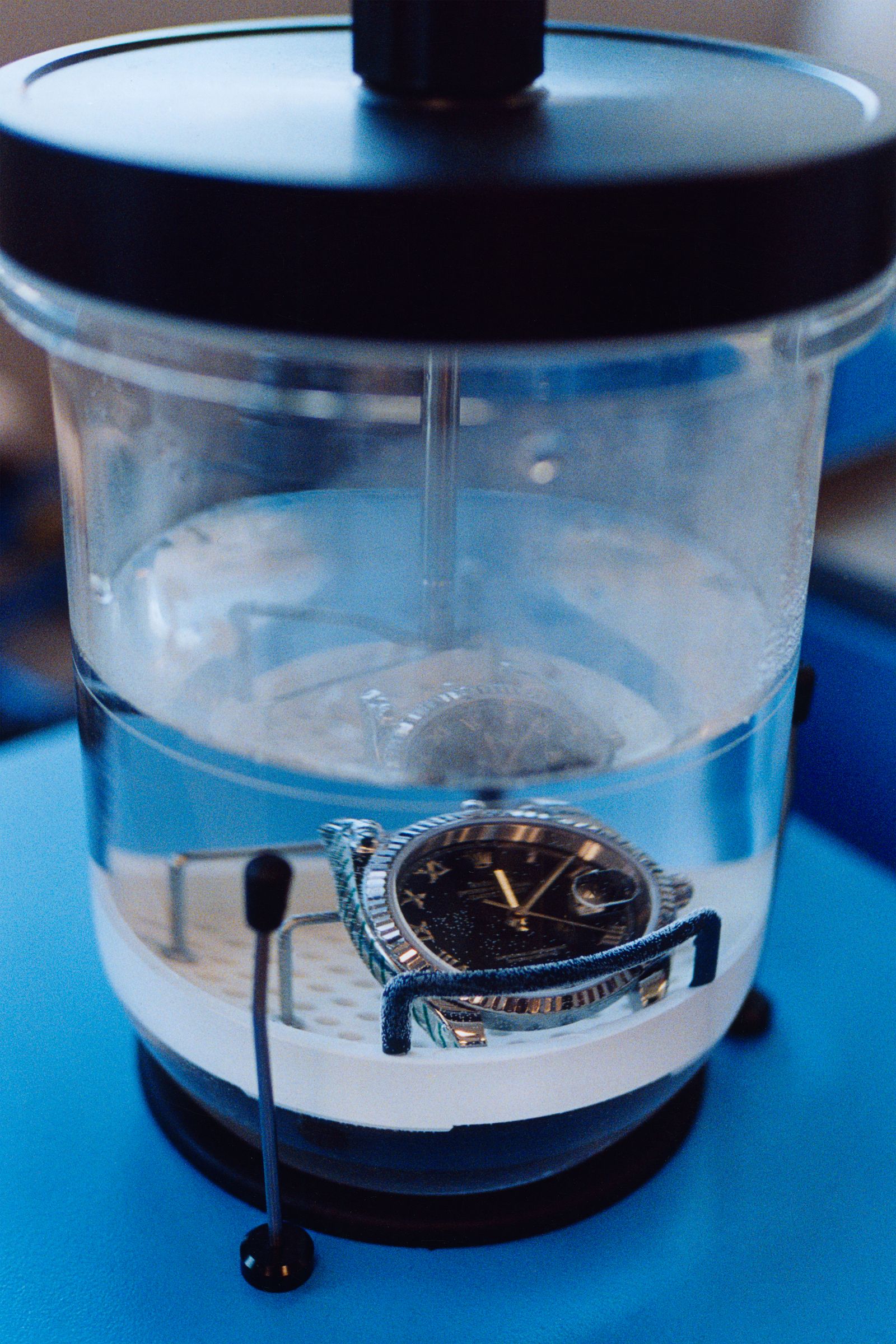
The center, in the Harwood District of uptown Dallas, nestled among shops and restaurants, is big and multipurpose, with offices, a large conference room, and a parts department. (For the past 25 years, Rolex has manufactured all of its own components.) The top floors are a cafeteria and a rooftop deck. The second and third floors make up a Rolex repair shop that houses some 100 employees and receives Rolexes sent in for service from all over the country. (There’s another just like it in Pennsylvania.) I got a tour of this space, but photos were strictly off-limits. The activity, spread out across the room, resembles an assembly line. A side room holds just a few tables where a handful of workers only disassemble bracelets and cases. In a room one door over, all the visible parts of the watch are sent through a six-bucket bath; the first one blasts components with ultrasonic waves, as well as an alkaline liquid detergent mixed with water to remove any residue. Another room is kitted out with machines that buff pieces to a bright sheen. The biggest room, the mothership, is crowded with specialists tinkering with minuscule movements. There’s a hush about the place; I felt like an interloper just by walking in. Every worker, loupe over the eye, sits lightly at benches that look like the drafting tables architects use, but with drawers on the sides and adjustable arm-length pads on the left and right for resting one’s elbows. Tweezers and small screwdrivers are deployed liberally, and everyone wears tiny prophylactics on their fingertips.
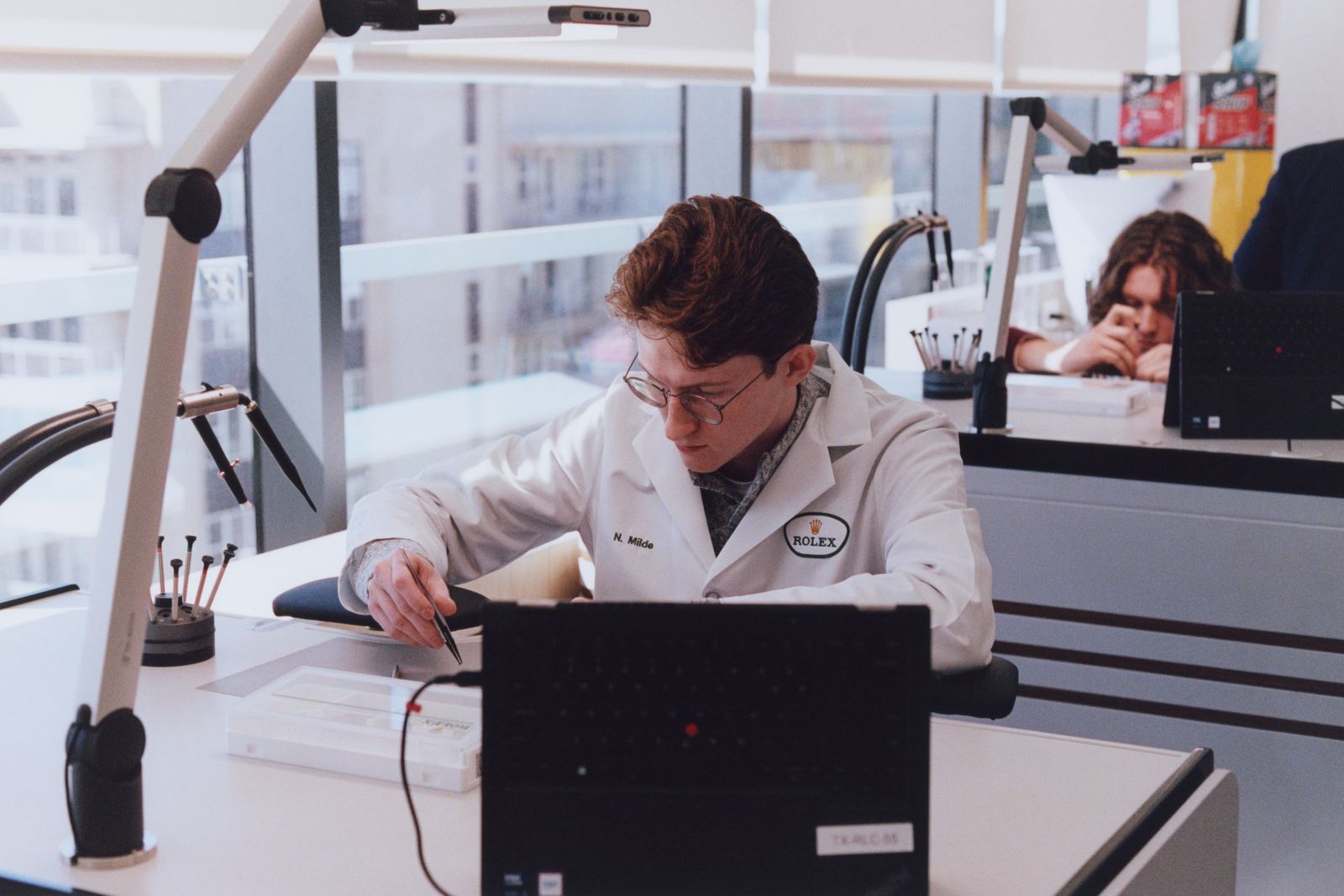
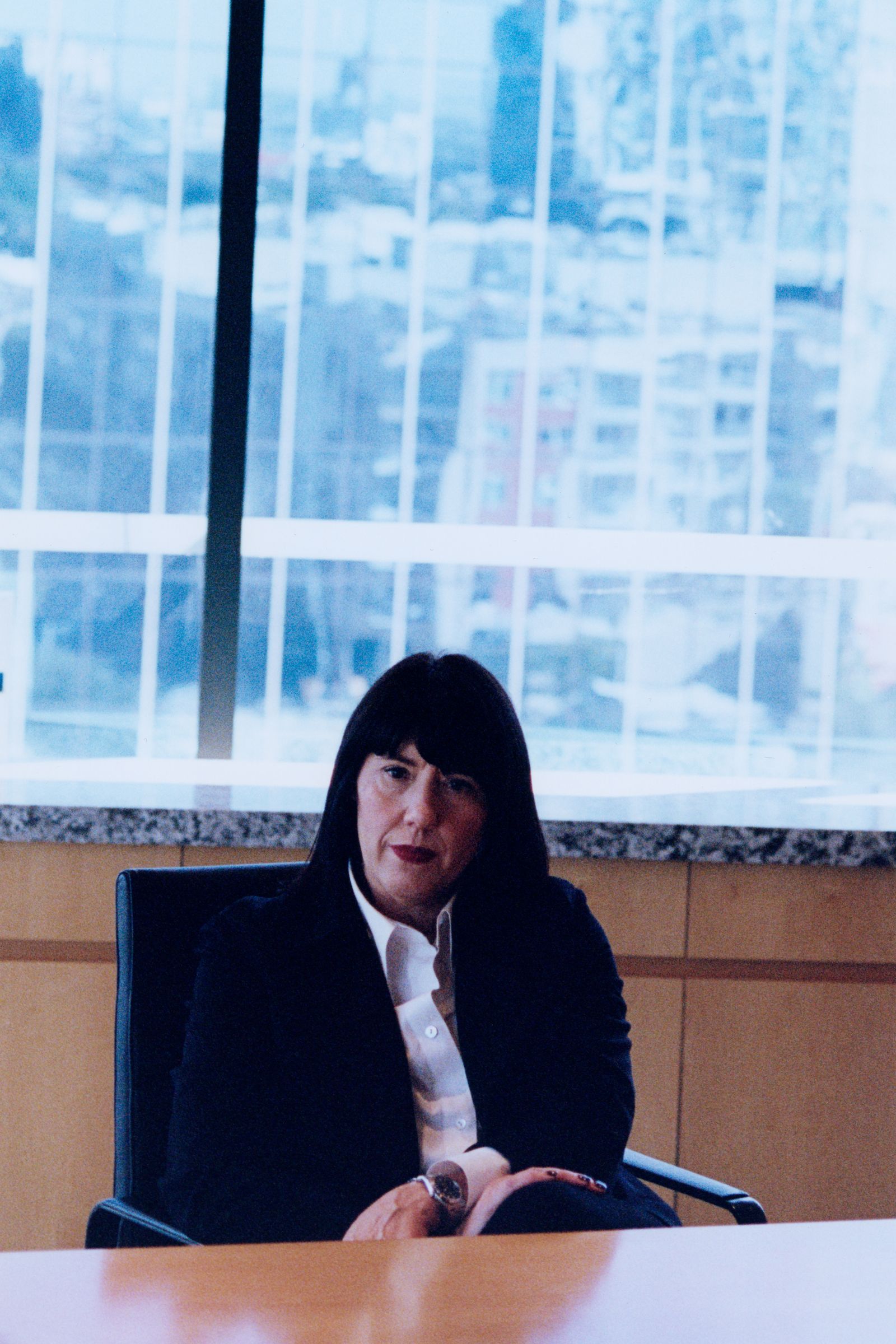
The fourth floor is entirely dedicated to the watchmaking school. My guide was Rachel Wolf, the school’s director. Rolex poached her from Dallas College, a community college where she was a vice president overseeing its technical programs. The whole point of this Rolex school, she says, is to give people a career pathway into a shrinking field that nonetheless still serves a purpose. “It’s great that it’s small,” says Wolf, noting that watchmakers are their own unique tribe. “But, also, there are a lot of watchmakers that are needed.”
In spite of the warnings about Rolex’s reticence, Wolf spoke freely about what it takes to get into this Rolex school, the only one in the US. Applications are fairly standard: demographic information, transcripts (if available), references, a résumé, an essay explaining why you want to be a Rolex watchmaker. If brownnosing is your thing, know that waxing poetic about the beauty of a Submariner will send Wolf’s eyes rolling into the back of her head. “I’m looking for people who are interested in learning and who aren’t brand driven,” she says. “We don’t want to have a watchmaking school that is good because people love Rolex. We want to have people who come to love Rolex because of their experience with the watches.” In virtual interviews, instructors look for students who don’t frustrate easily and can readily receive learning advice. Personability matters. Increasingly, watchmakers are not the stereotype of the hunchbacked recluse—jewelry stores are putting them out in the open for customers to see and talk to.
An in-person bench test is the final piece of admissions. Tuition at the watchmaker school is free, and Rolex pays students a stipend. But the company does make people pay their way to Dallas for this last test. You have to put skin in the game. (Students aren’t placed anywhere by the school—students must find their own jobs, at either independent jewelers or official repair centers—but Wolf emphasizes that becoming a Rolex Certified Watchmaker might mean relocating from your hometown.) Prospective students first stack screws as a warm-up activity. Think of the tiny fasteners holding together a pair of Ray-Bans. Now put them on top of one another. Next, applicants conduct a guided disassembly, and then a slightly less guided reassembly, of a Rolex watch.
Technical aptitude isn’t a prerequisite for Rolex university (one instructor’s past job was 911 dispatcher), but many of the students have previously worked with their hands. One current student worked with a furniture company, which shipped unassembled new pieces to her that she then had to figure out how to put together—because she had to write the instruction manual. Another student, 31-year-old Kirsten Butler, from Dallas, told me that working with something physical has been a “welcome change” from her corporate gig in multimedia communications. “It feels a lot more satisfying to get a micro-machine working,” she says.
“I tell students all the time: It’s not magic, it’s just skills and technique,” says Tim Rabe, a Rolex instructor with a white beard and a youthful mien. Before Rabe began training as a watchmaker at age 30, he was an apprentice to a goldsmith in Sioux Falls, South Dakota, for five years starting at age 19. “Once you learn the techniques, you can do this too.”
Accepted students don’t even see a watch for roughly eight weeks. Instead, they don dark blue coats and are shuttled to a wing of the fourth floor dedicated to micro-mechanics. They sit at a desk with a bench vise and handsaws, shaving and shaping down pieces of brass, wood, and aluminum according to spec sheets with watch-size measurements. The components inside a Rolex movement are probably a quarter of a half of a pinkie nail. Adjustments are normally made in hundredths of a millimeter, too small for the naked eye to see. Think of the cubes and cylinders toddlers push through the holes of a shape-sorting box. Students are forging shapes like that, but on a millimeter-size scale.
“It was training us to see how perfect things need to be, and how something needs to be perfect within one tenth of a millimeter,” says Eliza Kurtz. She’s 28 and one of the rare students who actually worked on a timepiece before coming to Dallas. In Baltimore, she was in charge of the Bromo Seltzer Arts Tower, where local artists rent out studios. Part of her job involved taking care of the 24-foot-tall clock atop the 289-foot-tall tower. Mostly oiling and dusting it, to make sure the clock kept time.
Over lunch with the school’s six instructors, I asked how they knew that the students they’re teaching, ranging in age from 18 to 48, will actually be any good once they start touching a Rolex movement. Curiosity and patience came up. Playing with Legos as a child also factored in. “You got to be weird,” says instructor Kevin Tuck.
What my time observing the artful, fine-bore work of watchmaking most reminded me of was the hours I spent as a kid—half-frustrated, half-blissful—painting metal figurines of various alien races to pit against my friends’ armies in tabletop games. (Yes, I wear glasses.)
“Did any of you guys ever play Warhammer?” I ask.
My digital recorder almost exploded. Brock McKee—a 33-year-old instructor with a luxuriant beard and one of the most chiseled side parts I’ve ever seen on a head of hair—dove into an anecdote about how much he liked building and painting his Warhammer armies. I had found my people. The Warhammer strain of weird tends to indicate the sort of person who can lose themselves in something behind-the-scenes and intricate, continually performing the same task without losing their mind. Tuck, a Houston native, is 39, flunked out of college, and then started working with a bench jeweler who encouraged him to become a watchmaker. “He said you can go to school to do this for a living and you will never be without a job,” Tuck recalls. “And there has never been a truer thing ever said to me, because I’ve been employed ever since.”
The new center in Dallas isn’t the first time Rolex made a bet on a school for watchmaking. In 2001, it opened a school in Lititz, Pennsylvania, that also housed a Rolex service center for repairing customers’ watches. It’s where Dallas director of service operations Stephen Noble, who showed me around this building’s service center, got his training as a watchmaker. The Lititz school, in principle, was for general watchmaking, a broad education whereby anyone coming out of the school could service any sort of watch. But Rolex closed the school in July 2025, two years after establishing the Dallas school. “It’s more of a honed mission,” Noble says of Dallas. “In the field, you want to work on Rolex. They’re designed to be serviceable, and they’re consistent. There’s a reason Rolex is at the top.”
I tried to find the right way to ask, Don’t you have to say that?
“It’s not just a Kool-Aid thing,” Noble adds before I can get the words out. “It’s true.”
When I arrived in Dallas, it was the same week Kurtz and the other students in cohort two were finally handed their white lab coats, a signature of Rolex culture at the school. In micro-mechanics, generally, you wear dark blue because everything’s dirty. But once you hit the classroom to learn the science of watchmaking, you wear white, because everything should be clean.
This is where trainees refine their skills in order to pass their in-person final in Geneva, which was scheduled in early February for the first cohort. It’s broken into three days. Day one, you have eight hours to diagnose why a specific Rolex movement isn’t working properly, and to then fix the problem. Day two, you get five hours to disassemble a case and polish its various bits without scratching them. Day three is a 150-question multiple-choice test focused on theory. Many of the student watchmakers in cohort one already have jobs lined up with watch dealers (assuming, of course, that they pass).
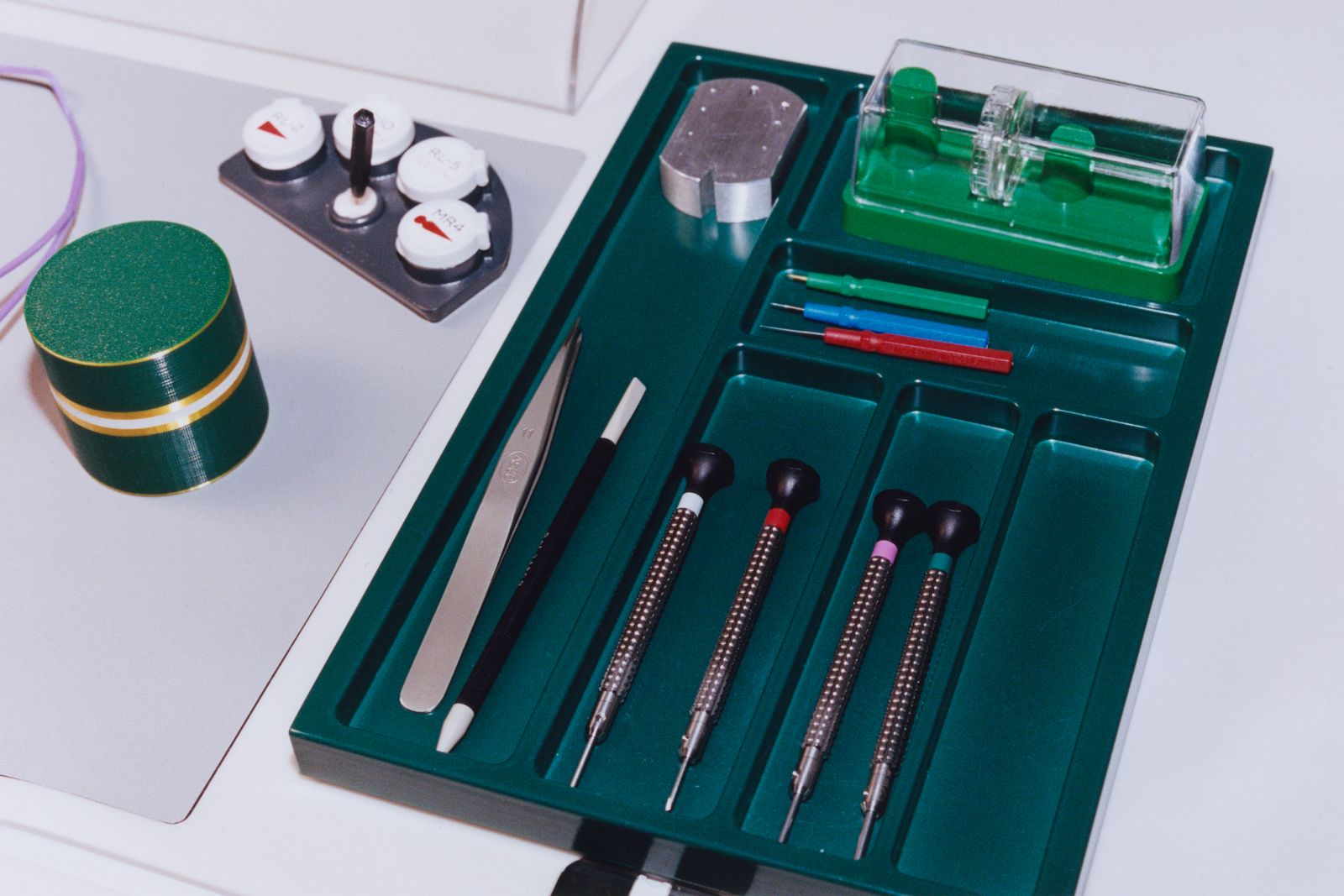
In classes of nine, each student works at their own ergonomic bench, similar to those in the service space, every weekday from 8 a.m. to 4 p.m. The screwdrivers on their desks, the microscopes they use, and the larger equipment employed to test the durability of a watch is exactly what they’ll see after they graduate and take up a position as a Rolex Certified Watchmaker. There’s a machine that throws superimposed digital lines over a watch face, meant to ensure that the trademark Rolex crown, etched into the crystal at the 6 o’clock position, is perfectly aligned with the marker at the 12 o’clock position. There are miniature water tanks to simulate the pressure at depths up to 330 feet, and a vacuum chamber meant for creating negative pressure to test helium escape valves on Sea-Dweller watches.
Even as instructors and students held tweezers, they repeatedly emphasized to me the toughness of the watch. Manny Villareal, a 27-year-old who previously worked at the Shinola watch factory in Detroit, likened Rolex movements to military tanks. Atomic bombs could go off everywhere, Rodriguez told me, but someone’s Rolex will still work. Noble told me that a Rolex will run “in spite of you.” This is the contradiction at the heart of Rolex: It’s an indestructible machine, designed to summit Everest, but still requires intensely delicate care.
According to Hess, the fine art dealer, the key to resolving this apparent oxymoron is the “serviceability” that Noble had mentioned. “A Rolex will continue to run for centuries with proper watchmaking,” Hess tells me. What makes the watches durable isn’t brute ruggedness. Rather, it’s the engineering that makes them nearly impermeable but also able to be opened up. That, and the fact that Rolex is committed to producing the parts and the expertise necessary for them to be repaired.
“Even if Rolexes are a dream to service,” Villareal says, “we still need skilled people to put tweezers to movement.” Translated: A Rolex is a nice thing. Nice things do sometimes wear down and break. Do you want to go buy a new Rolex? Or do you want to get your Rolex, the one that holds special significance in your life, ticking again?
After mastering the science of watchmaking, students spend six months learning the art of it, through what Rolex calls its immersion program. “It can be hard for a new watchmaker to translate what they learned in school to real-world repairs,” says McKee. “We’re trying to shorten that learning curve pretty substantially.” This is the time when watchmakers are expected to tackle the hardest stuff. Take the hairspring. Rolex hairsprings are tiny, blue-colored pieces of coiled wire, thinner than a strand of human hair, that are mounted in the center of the balance wheel. The hairspring ensures the balance wheel oscillates at its precise rate. It’s the heartbeat of every Rolex watch, a piece of technology dating back 350 years. An imperfection of 50 micrometers—the size of a paint pigment, as well as some forms of bacteria—can throw off a watch and make it run fast or slow by 30 seconds a day. Such a deviation might seem negligible. To Rolex, however, it might as well be a cardinal sin.
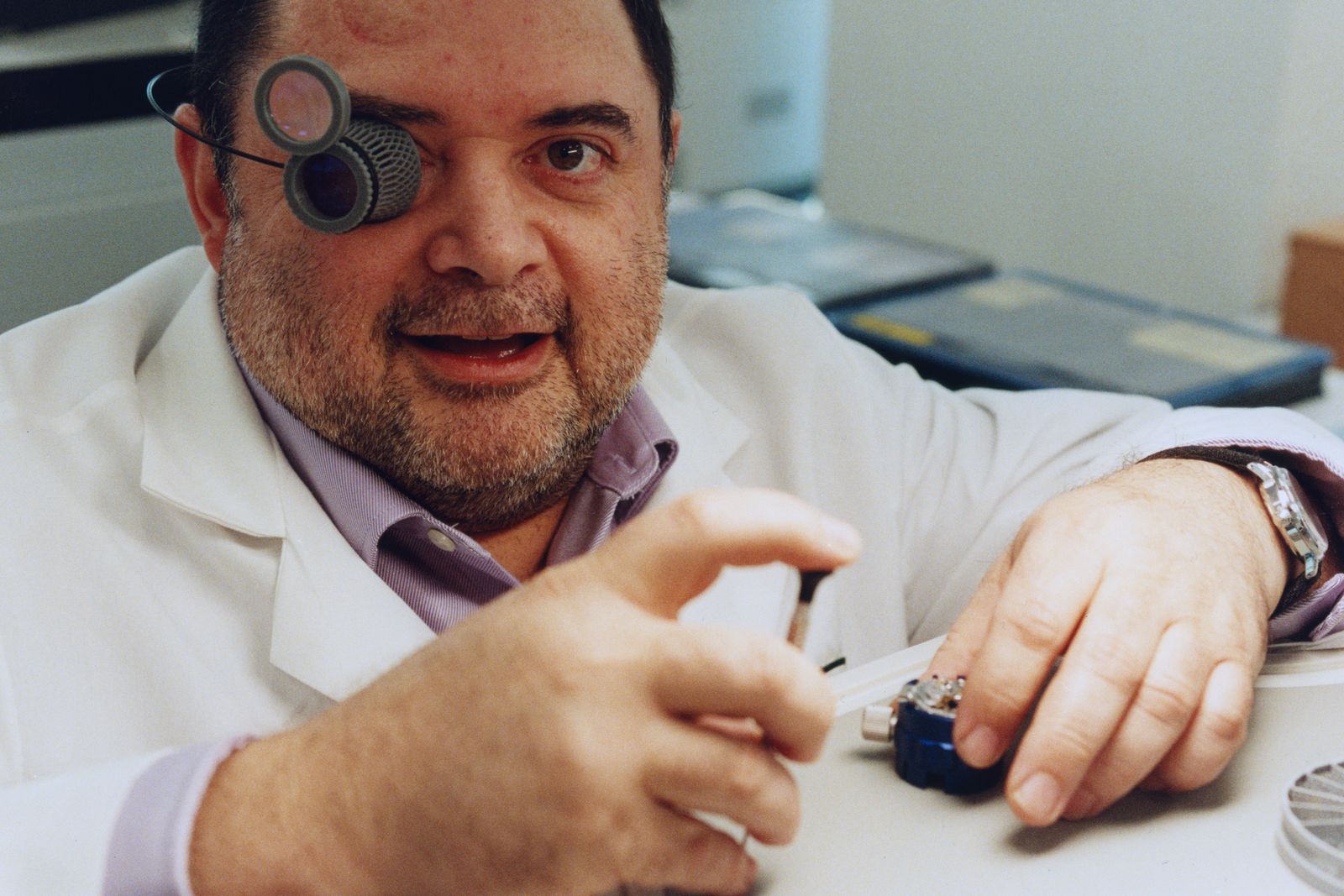
Johnny Nguyen, a 31-year-old instructor, was working on the second floor of the service center, not yet a fully fledged Rolex watchmaker, when he was plucked in 2023 to be the guinea pig for the new center’s entire curriculum. (Around the school they call him Johnny Six: To this day, he’s the only person to ever achieve a perfect score of 6 on Geneva’s polishing exam.) Nguyen says that once you begin tinkering with hairsprings and the finer points of Rolex movements, watchmaking “is just a giant art contest.” What does he mean by art? “Getting a watch to run within certain parameters, it’s kind of up to you. It’s not up to a machine,” he tells me. “To the watchmaker, it’s like you’re putting a part of you into it. Customers see the dial, the hands, the case, and that’s their watch. But internally—how it’s serviced, how it’s running—that’s the watchmaker in it.”
At lunch, other instructors had mentioned the hairspring, singling it out as the one component that took them years to truly master. Rabe described it as a Goldilocks problem: The watchmaker needs to cycle through too little and too much to find just right. There’s a fineness to some objects that can’t be understood by running the specs through ChatGPT. The watchmaker knows it is fixed because they feel it.
Toward the end of my day at the school, I veered into Kevin Tuck’s classroom. It was time for a group of students who had just received their white coats to size Rolex bracelets. The smallest of screws hold together each bracelet link, and a bit of Loctite sealant is further used to keep the screw from moving. You need a special heater, one that goes up to 130 degrees Fahrenheit, to break apart those glue bonds. But before you can apply the bracelet to heat, you need to make sure that the screwdriver you’re using to finally remove that screw fits its head tightly, without any wiggling.
Which is how I came to stand in silence watching Chris Rodiger, a 25-year-old painter, take one of his new screwdrivers and shave its head against a piece of marble stone. Back and forth, he traveled from stone to screw, each time hoping the tool wouldn’t wiggle. At one point Tuck came over to inspect Rodiger’s screwdriver. He looked at the tip for barely a second through his loupe before uttering one word: “More.” Eventually, after 15 minutes, the screwdriver tip fit snugly. Rodiger took his bracelet over to the heater, sat it there for less than a minute, and then unscrewed one link.
If I had to do that, I think I might’ve lost my mind. Hell, I couldn’t even remember to take gum out of my suit-jacket pocket before getting it cleaned—and had already resigned myself to buying a new one.
I exited Tuck’s classroom and got ready to leave. But as I made my way for the elevator to head back down to the lobby, Rabe pulled me into his classroom, parked me at his teacher’s bench, and handed me a loupe and a pair of tweezers. Then he put five tiny screws and a block of aluminum in front of me. Stack them, he told me.
I took a breath and tried picking one up. It launched right out of the grip of my pincers. “Here,” Rabe said. “Hold it like this.” He adjusted the tweezers in my fingers so that I was squeezing them at an angle, with the fulcrum pressed against my palm instead of sticking straight into the air. I grabbed a screw and placed it head down on the aluminum block. For another five minutes I wrestled with a second one until, finally, I managed to place the threaded end of the second screw atop the first screw’s flat tip.
Rabe congratulated me and gave me a small bag of Legos, a prize for my short stack. It was a Spider-Man figure. I put it together there and tucked it into one of the still-working pockets of my suit pants. When I returned home, I set it on the desk in my office. It’s not a Rolex, but it is my own personal monument to the satisfaction of organizing parts of my world. That the only thing that mattered was what I peered at through my loupe: a pile of screws waiting to be brought into order.